

A major accident doesn’t end when you leave the hospital or the tow truck hauls away the wreckage. The real work, physically, financially, and emotionally, often stretches on for months or even years afterward, and most people have no roadmap for what comes next. Friends and family offer sympathy, but few can tell you what the paperwork, the medical bills, or the quiet moments of self-doubt actually feel like. This article walks through the parts of recovery that rarely make it into the brochures, so you can go in with clearer eyes and a steadier plan.

Handling the Medical Bills That Keep Arriving
One of the first shocks after a major accident is how long the bills keep coming. You might think you are done once the hospital stay ends, but specialists, physical therapists, imaging centers, and equipment suppliers all bill separately and on their own schedules. It is common to receive invoices for the same visit from three or four different providers, each with its own confusing codes and deadlines.
The radiologist who read your X-ray, the ambulance company that transported you, and the anesthesiologist in the operating room are all separate businesses, even though you never chose any of them individually. Each one has its own billing department, its own timeline for submitting claims to insurance, and its own threshold for sending an account to collections. Some bills may not arrive until four to six months after treatment, long after you assumed the matter was settled. To stay on top of things, open a dedicated folder or spreadsheet the moment bills start arriving. Track the provider name, date of service, amount billed, amount covered by insurance, and your remaining balance for each invoice. This makes it far easier to spot duplicate charges, billing errors, or services you never actually received, all of which are more common than most people expect.
It also helps to request an itemized bill rather than accepting a summary statement, since summaries often bundle charges in ways that hide mistakes. If a balance seems off, call the provider’s billing office directly and ask for an explanation before paying anything. Many hospitals also have financial counselors who can explain charges or set up a payment plan, which is worth asking about even if you have not missed a payment yet.
- Request an itemized bill from every provider before paying anything — generic summary statements often hide upcoded or duplicate charges
- Keep a dedicated folder or spreadsheet tracking every statement, payment, and the date you contacted each provider
- Ask your insurance company for an explanation of benefits (EOB) on each claim, then compare it line-by-line against the provider’s bill
- Call billing departments directly if a charge looks duplicated, unclear, or higher than your EOB suggests you owe
- Watch for bills arriving months apart from different providers tied to the same accident — ERs, radiologists, and ambulance services often bill separately
- Negotiate payment plans before a bill goes to collections, and ask specifically about interest-free installment options
- Ask if the provider offers a prompt-pay or financial hardship discount, which can shave 10–30% off the balance
- If a bill seems wrong, request it be placed on hold while you dispute it, in writing, so it doesn’t get sent to collections during review

Choosing the Right Legal Support Early
Many people wait too long to get legal advice because they assume insurance will simply handle things fairly. In reality, insurers are businesses first, and their initial settlement offers rarely reflect the true cost of lost wages, future treatment, or long-term pain. Bringing in the best car accident attorney you can find early in the process often changes the trajectory of a claim, since evidence and witness memories fade quickly.
A good attorney does more than negotiate a check. They coordinate with your doctors to document how the injury affects your daily life, they handle correspondence with insurance adjusters so you are not pressured into quick decisions, and they can often identify additional sources of compensation you did not know existed. Choosing someone with real trial experience matters too, because insurers tend to take cases more seriously when they know a lawyer is prepared to go to court if needed.
Rebuilding Strength Through Physical Therapy
Physical recovery rarely follows a straight line, and that catches most people off guard. You might feel strong progress for two weeks, then plateau or even regress slightly as scar tissue forms or new movement patterns reveal weaknesses that were masked by swelling early on. Therapists often adjust the plan multiple times, and that is normal, not a sign that something has gone wrong.
It also helps to understand that pain and function do not always move together. Some patients report feeling less pain while still struggling with basic tasks like climbing stairs or lifting groceries, and others feel ongoing discomfort even as their strength returns. Tracking small milestones, rather than focusing only on pain levels, gives a more honest picture of how recovery is actually progressing.

Managing the Emotional Aftermath Nobody Mentions
Physical injuries get most of the attention, but the psychological impact of a major accident can be just as disruptive. Anxiety while driving, sleep disturbances, flashbacks, or sudden irritability are common, even in people who never considered themselves anxious before. These reactions are not a character flaw; they are a predictable response to trauma, and they often improve with the right support.
- Consider speaking with a therapist who specializes in trauma or PTSD
- Join a support group with others who have been through similar accidents
- Watch for signs of depression, including withdrawal from activities you used to enjoy
- Give yourself permission to grieve the version of life you had before the accident
- Reintroduce normal routines gradually rather than forcing yourself back all at once
Returning to Work and Rebuilding a Steady Income
Financial strain often sneaks up on people weeks after the accident, once the initial adrenaline and support from friends fades. If your job requires a physical move to a new office or facility while you are still recovering, the logistics can feel overwhelming, and this is where planning ahead for corporate moving arrangements through your employer can ease a surprising amount of stress. Employers who have handled workplace relocations before often have resources in place to make the transition gentler for someone returning after an injury.
It is also worth having an honest conversation with your employer about modified duties or a phased return. Pushing to go back full time too quickly can set recovery back, while staying out too long can create its own financial and emotional strain. Many workplaces are more flexible than people expect once they understand the full picture of what you are managing.
Navigating Property Damage and Site Repairs
When an accident involves property damage, whether to a vehicle, a home, or a small business, the repair process introduces its own learning curve. Contractors may need specialized equipment you never considered before, and understanding even a little about what is involved helps you ask better questions and spot red flags in estimates before they become expensive surprises. Get multiple quotes when possible, and ask each contractor to break down labor, materials, and equipment rental separately so you can compare them line by line.
A repair estimate that lumps everything into one number is harder to question and easier to pad. For example, if land grading or driveway repair is part of restoring a damaged property, a contractor might bring in a grader blade to smooth and level the surface properly before new material goes down. Knowing that a grader blade is standard for this kind of work means you will not be caught off guard by a line item for heavy equipment, and you can ask whether the job truly requires it or whether a smaller attachment would do. It also helps to understand rough timelines. Grading and resurfacing a residential driveway might take one to three days depending on size and drainage issues, while larger commercial lots can take a week or more. Knowing this in advance lets you plan around the disruption instead of being surprised by it.
Larger structural repairs sometimes call for materials most people have never had to think about. Builders working on damaged commercial structures may rely on composite metal decking for flooring and roofing systems because it combines strength with lighter weight, which can speed up reconstruction timelines. This material typically pairs corrugated steel sheeting with a poured concrete topping, letting the steel act as both a working platform during construction and permanent reinforcement afterward. Contractors often choose it over traditional wood framing when a structure needs to meet stricter fire codes or span longer distances without additional support columns.
It also tends to hold up better against moisture and pests, which matters if your property sustained water damage alongside structural harm. Ask your contractor whether this applies to your rebuild, since the choice affects both repair costs and how long the project takes. Knowing the basic vocabulary contractors use helps you follow along during estimates and avoid feeling lost in your own recovery project. Terms like “gauge” (referring to the thickness of the metal), “span rating,” and “load capacity” will come up often, and understanding them lets you ask sharper questions about safety margins and material choices. It’s worth requesting that your contractor walk you through the materials list line by line before signing off on any estimate, so you know exactly what you’re paying for and why.
Coordinating Repairs on Larger or Rural Properties
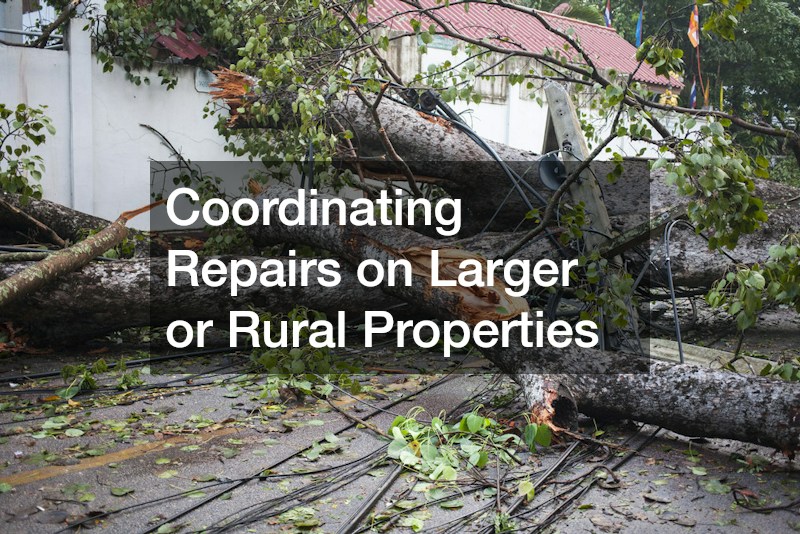
Accidents that damage larger properties, such as farms, rural homes, or small commercial lots, often require temporary solutions while permanent repairs are underway. Unlike a quick fix on a city lot, rebuilding in a rural area can mean weeks or even months of work, since crews, materials, and inspectors may all have farther to travel. That extended timeline changes the logistics of recovery in ways many property owners don’t anticipate. If a work crew will be on site for an extended period, practical considerations like sanitation become important fast.
Many property owners arrange construction restroom trailers so workers and family members are not left without basic facilities during a long rebuild, especially when the main house or septic system is part of the damage. These units range from simple single-stall setups for small crews to multi-stall trailers with running water and climate control for larger jobs lasting through hot summers or cold winters. Beyond restrooms, larger properties often need temporary power hookups, water tanks, and secure storage for tools and materials, since rural sites rarely have the same infrastructure as urban job sites.
It’s worth asking contractors upfront whether these items are included in their bid or whether the property owner needs to arrange them separately. These rentals are more common than people realize and can be arranged quickly through most equipment suppliers, often with delivery within a day or two. Many suppliers also offer weekly or monthly rates, which tend to be more economical than daily pricing for projects expected to run past a few weeks. Planning for these details early can prevent delays once repair work actually begins.
For properties that lost a barn, workshop, or storage structure in the accident, rebuilding does not always mean replicating the original design. Rural and larger properties often come with added complications — long driveways that slow emergency and contractor access, outbuildings spread across acres, and insurance adjusters who may be less familiar with agricultural or multi-structure claims than they are with standard residential ones.
Many owners are choosing hoop buildings for fast, cost-effective replacement space, since these structures can be erected in days rather than months and provide flexible storage or shelter while longer-term plans are finalized. A typical hoop building can cost a fraction of traditional pole-barn construction per square foot, which matters when insurance payouts take weeks to process. They also require less site prep, making them practical when the original structure’s foundation is damaged or needs to be relocated. Before committing to any rebuild, it’s worth asking a few practical questions: Does the new structure need to meet current zoning or setback requirements that didn’t exist when the original was built? Will it need electricity, water, or climate control for equipment, livestock, or vehicles? Is the location still the best fit, given drainage, wind exposure, or access for delivery trucks? Understanding these options ahead of time can prevent rushed decisions driven by stress rather than what actually fits your needs. Taking a week or two to compare quotes, structure types, and placement options almost always pays off compared to signing the first contract offered in the aftermath of a loss.
Recovering from a major accident touches nearly every part of life, from medical appointments and legal paperwork to emotional healing and practical property repairs. No single resource will cover everything, but knowing what questions to ask and what challenges to expect puts you in a far stronger position than facing it blind. Take things one decision at a time, lean on professionals who specialize in each piece of the puzzle, and give yourself credit for the progress that often happens quietly, day by day.
