

It is a common misconception that paving projects are purely cosmetic endeavors designed to boost a property’s curb appeal. While a fresh, immaculately laid surface certainly transforms the visual aesthetic of a home or business, these structures serve a much deeper purpose. Paved surfaces are the fundamental foundation of a property’s functionality, safety, and long-term value. They are the essential pathways that bear the immense, daily weight of heavy vehicular traffic, guide pedestrian footfall safely, and protect the underlying soil from catastrophic erosion.
The true cost of poor planning when it comes to outdoor surfaces cannot be overstated. All too often, property owners focus entirely on the top layer, cutting corners on the invisible base preparation or selecting the wrong materials for their specific climate. This shortsighted approach inevitably leads to disaster. Without a properly engineered foundation, even the most expensive surface materials will begin to shift, sink, and crack within a matter of months. What starts as a minor aesthetic blemish quickly evolves into a massive structural failure and an expensive drainage nightmare, threatening nearby foundations and turning your investment into a liability.
The purpose of this comprehensive guide is to arm you with the knowledge necessary to execute a flawless installation. Whether you are upgrading a residential driveway or overhauling a massive commercial lot, the underlying principles remain the same. In the following sections, you will discover a detailed blueprint for evaluating your native soil, designing proper water management systems, selecting the most resilient materials, and ultimately, ensuring your project is executed to the highest industry standards.
Evaluate Your Property’s Drainage and Soil Health

The most critical phase of any paving project happens long before the first load of surface material ever arrives on site. The invisible groundwork—specifically water management and soil preparation—determines whether your new surface will last for decades or fail after its first winter. A beautiful topcoat cannot compensate for a weak foundation.
Grade the Surface to Direct Water Away from Structures
Water is the ultimate enemy of any paved surface. If water is allowed to pool or seep beneath the top layer, it will slowly erode the base material. During freezing temperatures, this trapped moisture undergoes a freeze-thaw cycle, expanding as ice and forcefully pushing the pavement upward in a destructive process known as frost heave.
-
Calculate the Slope: To prevent water accumulation, the subgrade must be meticulously pitched to direct runoff away from buildings, retaining walls, and high-traffic zones. A minimum pitch of 2% (a drop of roughly one-quarter inch per foot) is the standard requirement to ensure gravity actively pulls water off the surface and into designated drainage areas.
-
Install Sub-Surface Drainage: In areas with heavy rainfall or a naturally high water table, surface grading alone may not be enough. You may need to incorporate French drains or catch basins beneath the base layer to capture and reroute subterranean water before it compromises the structural integrity of the site.
Test Soil Compaction and Sub-Base Integrity
Native soil types vary wildly, and they dictate the depth and composition of the structural sub-base you will need. Expansive clay soils, for example, swell dramatically when wet and shrink when dry, requiring a much thicker layer of crushed stone to stabilize the area. Well-draining sandy loam, on the other hand, provides a naturally stable foundation that requires less modification.
Because soil composition is so complex, it is essential to have experienced local paving contractors conduct a thorough site evaluation. They will test the subgrade strength and determine how far down the crew must excavate to reach stable earth. The sub-base—the layer of compacted aggregate sitting between the raw soil and the final surface—is what actually bears the weight of vehicles.
Source High-Quality Aggregate and Materials Early
The supply chain of base rock is a critical factor in your project’s timeline and success. A proper sub-base is not just random gravel; it requires a highly specific mix of large, crushed stones with sharp edges that lock together, combined with fine rock dust that fills the microscopic voids during the mechanical compaction process.
Working closely with a reputable concrete supplier or aggregate yard is necessary to ensure that consistent, climate-appropriate mix designs arrive on site precisely when needed. If the base material lacks the correct ratio of fines to coarse aggregate, it will never achieve maximum compaction, leaving your final surface vulnerable to rutting, settling, and total structural failure under heavy loads.
Select the Most Durable Materials for High-Traffic Zones
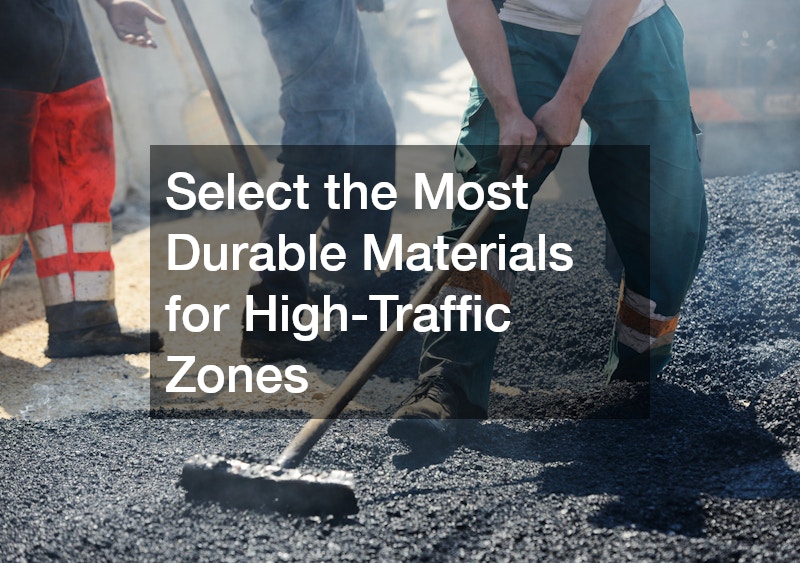
Once the foundation is properly engineered and graded, the next critical step is selecting the correct surface material. This decision should never be based on aesthetics alone; it requires a careful analysis of your local climate, the specific load requirements of the space, and your long-term maintenance budget.
Weigh the Cost-to-Lifespan Ratio of Surface Options
Different materials offer distinct advantages and drawbacks depending on their environment. Dark, petroleum-based surfaces are incredibly popular in colder climates because they are highly flexible. This flexibility allows them to expand and contract with severe temperature fluctuations without snapping. Furthermore, the dark color absorbs radiant heat from the sun, helping snow and ice melt rapidly during the winter months.
However, maximizing the lifespan of asphalt driveways requires a rigid commitment to maintenance. The surface must be cleared of oil spills, which eat away at the petroleum binders, and it requires a professional sealcoating every three to five years to prevent oxidation from the sun. In contrast, rigid poured slabs offer incredible load-bearing longevity and require far less routine sealing, though they represent a higher upfront cost and are more susceptible to salt damage in freezing climates.
Plan for Heavy Vehicle Loads and Turnarounds
A standard residential installation is typically engineered to support passenger cars and light SUVs. However, if your property frequently hosts recreational vehicles, heavy delivery trucks, or large equipment, a standard application will fail spectacularly.
-
Increase Structural Thickness: For heavy-duty applications, the structural thickness must be increased. This might mean excavating deeper for a thicker base layer and opting for a 3-inch or even 4-inch topcoat rather than the standard 2-inch residential layer.
-
Design Proper Turning Radiuses: Heavy vehicles exert immense sheer force on a surface when they turn. If the layout is too tight, the friction from large tires pivoting in place will grind the top layer into loose gravel. Designing wide, sweeping turnarounds prevents this localized wear and tear.
Verify Proper Installation Techniques for Edge Support
The perimeter of any paved area is its weakest point. Edge failure occurs when the borders crumble, crack, and break away because they lack adequate structural support to hold the material tightly together under pressure.
To prevent the sides from blowing out over time, the installation must utilize proper wooden forms during the pouring phase, angled grading along the perimeters, or specialized structural restraints. It is highly advisable to hire specialized driveway contractors who deeply understand weight distribution and edge reinforcement, rather than relying on general handymen who might just taper the edges into the grass, leaving them dangerously thin and brittle.
Elevate Outdoor Living Spaces with Custom Hardscaping
Moving away from the strictly utilitarian surfaces meant for vehicles, hardscaping allows property owners to create stunning, functional outdoor living spaces. Patios, pool decks, and garden walkways require a different approach to material selection and design, focusing heavily on aesthetics, pedestrian safety, and integration with the surrounding landscape.
Integrate Walkways that Complement Architectural Aesthetics
An outdoor living space should feel like a natural extension of the primary building, not an afterthought. When designing walkways and gathering areas, take time to carefully blend the hardscape colors, patterns, and textures with the property’s existing exterior paint, stone veneers, and surrounding flora. A sleek, modern home pairs beautifully with large, geometric, monochromatic slabs, while a rustic property benefits from earth-toned, irregular shapes that mimic natural flagstone.
Utilize Modular Stones for Flexible, Climate-Resilient Surfaces
For areas that experience aggressive freeze-thaw cycles, modular design offers incredible resilience. Unlike a massive, unbroken slab that might crack under the pressure of expanding ground ice, modular surfaces are built upon flexible base layers of compacted sand and specialized bedding gravel. This allows the individual pieces to shift and flex slightly with the earth’s movement without causing permanent damage.
Furthermore, the maintenance benefits of a modular approach are significant. If a heavy cast-iron grill is dropped and shatters a single patio paver, you do not have to tear up the entire deck. That single damaged unit can be easily extracted using specialized tools and replaced with a spare, restoring the surface to perfect condition in a matter of minutes for a fraction of the cost.
Specify Stamped and Colored Finishes for High-End Appeal
If you prefer the seamless look and rapid installation of poured surfaces but desire the aesthetic of natural stone or brick, stamped and colored finishes provide the ultimate solution. This technique involves pouring a continuous slab and then impressing heavy, textured polyurethane mats into the surface before it fully cures.
-
Apply Color Hardeners: To achieve a realistic look, dry-shake color hardeners are broadcast over the wet surface, penetrating the top layer to provide a rich, durable base color.
-
Use Release Agents: A secondary, contrasting antiquing release agent is applied to prevent the texturing mats from sticking while simultaneously settling into the grooves to create the illusion of deep grout lines and natural shadow.
-
Time the Cure: The window for stamping before the material sets is incredibly short, often just a matter of hours depending on the temperature and humidity. Emphasize the necessity of using highly experienced concrete contractors for this specific task, as a crew that works too slowly will end up with shallow, unconvincing textures as the slab hardens prematurely.
Execute Commercial Upgrades Without Disrupting Business

Upgrading the surfaces of a commercial property introduces a web of logistical challenges and strict regulatory requirements that simply do not exist in residential projects. For a business, the parking lot is the welcome mat; if it is dangerous, chaotic, or inaccessible, customers will take their money elsewhere. The primary goal of a commercial upgrade is to execute the structural improvements while keeping the doors open and revenue flowing.
Phase the Project to Keep Customer Access Open
Shutting down an entire retail plaza or office complex for a week is rarely an option. Therefore, commercial projects must be meticulously phased. This involves dividing the massive footprint into manageable sections that can be excavated, prepped, and finalized independently.
-
Establish Temporary Walkways: Clear, highly visible pedestrian pathways must be created using barricades and temporary ramps to ensure staff and customers can navigate from their vehicles to the entrance safely, away from heavy machinery.
-
Route Vehicular Traffic: You must coordinate with your project manager to set up temporary traffic flow patterns, complete with clear signage and flaggers if necessary, to keep delivery trucks and customer vehicles moving without causing gridlock.
Ensure Strict Compliance with Accessibility Guidelines
Commercial properties are legally bound by strict local and federal accessibility guidelines, such as the Americans with Disabilities Act (ADA). Failing to meet these exacting standards during an upgrade can result in failed municipal inspections, delayed openings, and devastating civil lawsuits.
The regulations govern every millimeter of the accessible route. You must adhere to exact slope requirements for wheelchair ramps, mandated spacing and dimensions for van-accessible handicap stalls, and the correct application of tactile warning surfaces, such as truncated domes, at the transition between pedestrian walkways and vehicular paths. Because the legal and financial stakes are so high, utilizing specialized commercial concrete services that specialize in ADA-compliant construction is absolutely essential to protect your enterprise.
Implement Preventative Maintenance on Existing Lots
For property managers looking to preserve their current assets rather than undergoing a total replacement, proactive maintenance is the ultimate financial strategy. Commercial lots take an absolute beating from constant traffic, heavy garbage trucks, and leaking vehicle fluids.
Establishing a rigid preventative maintenance schedule—including routine sealcoating, hot-rubber crack filling to keep water out of the base layer, and fresh line striping to maintain safe traffic flow—extends the life of the lot by decades. Property managers should bring in a dedicated parking lot resurfacing contractor at the very first sign of surface oxidation or minor alligator cracking. Addressing these minor, localized failures early prevents water from penetrating the sub-base and stops massive, suspension-destroying potholes from ever forming.
Vet and Secure Reliable Construction Partners
The construction industry is unfortunately saturated with fly-by-night operators who offer rock-bottom prices, execute shoddy work, and vanish when the surface begins to crumble a year later. Securing a reliable construction partner is just as important as selecting the right materials. You must employ a rigid, uncompromising methodology for interviewing, quoting, and hiring the team that will execute your vision.
Demand Proof of Licensure, Bonding, and Liability Insurance
Before you even discuss design or pricing, you must verify the contractor’s credentials. Ask for physical copies of their state licensure, their surety bond, and their certificates of liability and workers’ compensation insurance.
These documents are not mere formalities; they are your financial shield. If an uninsured worker is severely injured on your property during excavation, you could be held liable for their medical bills. Similarly, if an operator loses control of a heavy roller and smashes into your building’s foundation, liability insurance ensures that the contractor’s policy covers the devastating structural damage, rather than your own homeowner’s or business insurance policy.
Request and Verify Detailed Scope-of-Work Proposals
A professional contractor will never give you a quote written on the back of a napkin. You must request highly detailed, itemized scope-of-work proposals from at least three different companies.
-
Read the Specifics: Teach yourself how to read the bid. Look for exact numbers: the tonnage of material to be used, the exact depth of sub-base excavation, the methods of mechanical compaction, and a guaranteed timeline for project completion.
-
Beware the Lowest Bidder: If one quote is drastically lower than the others, it is an immediate red flag. You must aggressively warn against accepting exceptionally low bids from asphalt paving contractors that lack an itemized breakdown. Often, these operators cut their prices by digging a shallow base, laying a dangerously thin topcoat, or worse, relying on recycled, leftover materials scraped from their previous jobs.
Prioritize Regional Expertise and Past Project Portfolios
Finally, prioritize companies that have deep roots in your specific region. A company that understands how the local soil behaves and how the regional climate swings will always build a superior product.
Do not rely solely on online reviews, which can be easily manipulated. Ask the contractor for a list of past job sites in your area that are at least five years old. Take the time to physically drive to these locations. Observing how their work has weathered the local climate and traffic over several years is the truest test of their craftsmanship. There is immense peace of mind that comes from choosing an established local paving company that relies on a strong community reputation, maintains a physical office presence you can visit, and has a proven track record of honoring their long-term warranties.
Conclusion
A truly successful paving project is a masterclass in preparation; it is eighty percent invisible groundwork and twenty percent top-level execution. As we have explored throughout this guide, prioritizing meticulous drainage planning, understanding soil health, and sourcing high-quality base materials are non-negotiable steps. Whether you are dealing with a small residential walkway or a sprawling commercial complex, cutting corners on the foundation is a guaranteed path to premature failure and staggering repair costs.
The long-term value of doing the job right the first time cannot be exaggerated. A professionally engineered and well-maintained surface does far more than just look pristine. It actively enhances the safety of everyone who steps foot on your property, exponentially boosts your curb appeal, ensures total compliance with municipal regulations, and provides decades of reliable, stress-free functionality.
Do not wait for deep potholes to form or for water to begin pooling against your foundation. Take proactive control of your property’s infrastructure today. Walk your grounds, assess your current surfaces for early warning signs of failure like hairline cracks or slight settling, and begin reaching out to qualified, heavily vetted professionals to map out your next structural upgrade.
