
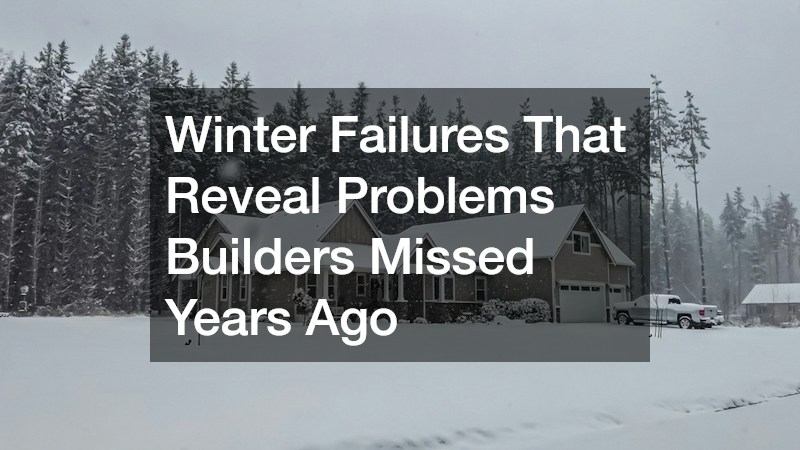
The first hard freeze of the year has a way of exposing every shortcut a builder took and every repair a previous owner put off. Cracked pipes, failed heating systems, and sagging rooflines rarely appear out of nowhere in January – they are usually the final chapter of a problem that started during construction or a renovation years earlier. Understanding what winter failures are really telling you can save you from repeating the same costly mistakes. This guide walks through the most common cold-weather breakdowns and what they reveal about the home behind them.
Furnace Breakdowns That Signal Poor Original Installation

When a furnace quits in the middle of a cold snap, homeowners often assume the unit simply wore out. In many cases, though, the real issue traces back to how the system was sized and installed in the first place. A furnace that is too small for the square footage will run constantly and fail early, while one that is too large will short-cycle and stress its components. These mistakes are rarely visible until the system is pushed to its limit during the coldest weeks of the year.
If your heating system fails repeatedly in the same way each winter, it is worth having a professional look past the symptom and into the root cause. A qualified technician performing furnace repair can often tell within minutes whether the unit was matched correctly to the home’s duct system and heating load. Recurring issues like uneven heating, strange cycling patterns, or a system that never quite reaches the thermostat setting are red flags of an installation problem rather than simple wear and tear.
- Short-cycling (turning on and off frequently) often points to oversizing
- Rooms that never warm up evenly suggest ductwork was never balanced correctly
- A furnace older than 15 years working harder than it should may have been undersized from day one
- Frequent pilot or ignition failures can indicate venting problems built into the original install
Frozen Pipes That Expose Weak Insulation Choices
Pipes do not freeze randomly. They freeze in specific, predictable locations: exterior walls, unconditioned crawl spaces, and attics where insulation was skipped or installed too thin to do its job. When a builder rushes a project or cuts corners on materials, these are often the first areas affected, and the consequences do not show up until temperatures drop well below freezing. A single frozen and burst pipe can cause thousands of dollars in water damage within hours.
If the same pipe freezes winter after winter, that is not bad luck, it is a design flaw. The fix usually involves more than wrapping the pipe in foam; it may require opening a wall to add proper insulation or rerouting the line away from an exterior wall entirely. Homeowners who have dealt with repeated freezing should treat it as a long-term structural issue rather than a seasonal inconvenience to manage year after year.
- Pipes running through garages or exterior walls are the most common failure points
- Gaps around pipe penetrations let cold air infiltrate even well-insulated walls
- A pipe that froze once is statistically likely to freeze again without intervention
- Adding heat tape is a temporary fix, not a permanent solution
Roof Ice Damming That Points to Ventilation Gaps
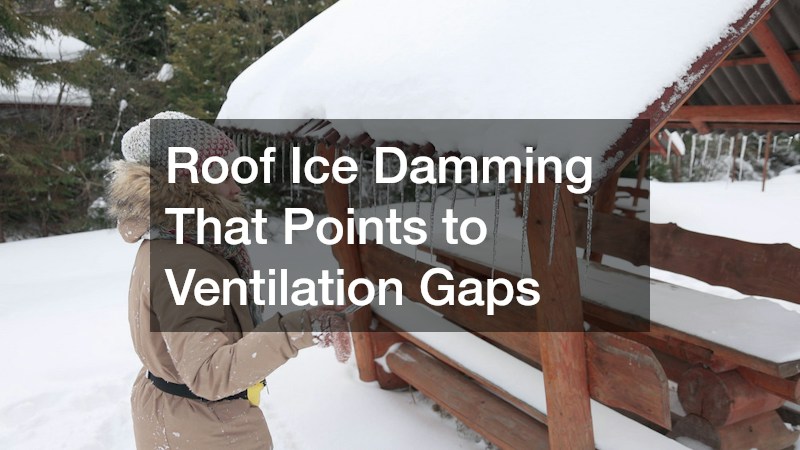
Ice dams form when heat escapes from the living space into the attic, melting snow on the roof that then refreezes at the colder eaves. This cycle is almost always a sign of inadequate attic insulation or poor ventilation, not simply heavy snowfall. A well-built roof system keeps the entire roof deck at a consistent, cold temperature so snow melts evenly rather than pooling and refreezing at the edges. The telltale shape gives the problem away: a thick ridge of ice forming along the eaves, sometimes with icicles hanging below, while the upper roof stays snow-covered. That pattern means the roof surface above the heated living space is warm enough to melt snow, but the overhang beyond the exterior wall stays cold enough to refreeze the runoff. Builders who skipped a continuous soffit-to-ridge ventilation path, or who let insulation get compressed and gapped near the eaves, created exactly this condition years before the first dam ever formed. A handful of recurring shortcuts show up again and again in these attics: insulation baffles missing or blocked at the soffits, bathroom exhaust fans vented into the attic instead of outside, can lights installed without air-sealed housings, and insulation batts cut short around the attic hatch or chimney chase. Each of these creates a path for warm, moist household air to reach the roof deck. Even an attic with impressive R-value on paper can underperform if these bypass points were never sealed during construction. The long-term damage compounds the immediate mess of water stains and gutter strain. Trapped water can back up under shingles and soak the roof deck, leading to rot, mold, and sagging that isn’t visible until a contractor pulls back the roofing material. Homeowners who only patch the ice dam symptom each winter, without correcting the insulation and ventilation gap underneath, end up repeating thousands of dollars in damage on a cycle the original builder set in motion.
Ice dams form when heat escaping from the living space warms the roof deck, melting snow that refreezes into a ridge at the colder eaves. That trapped water backs up under shingles and finds its way into attics and exterior walls. Homeowners dealing with recurring ice dams should have the attic inspected before assuming the roof itself is to blame. Experienced Roofing Contractors can assess whether soffit vents are blocked, whether baffles were installed correctly, and whether insulation depth meets code for the climate zone. A properly balanced system needs roughly one square foot of ventilation for every 150 square feet of attic floor, split between intake at the soffits and exhaust at the ridge. If insulation has been blown in without baffles to preserve that airflow path, or if soffit vents have been painted over or stuffed with debris, the whole system stops working as designed. In many older homes, the ventilation system was never adequate to begin with, built to standards that predate current energy codes by decades. Bathroom fans vented directly into the attic instead of outside, can lighting without proper seals, and attic hatches without weatherstripping all add warm, moist air to the space and make matters worse. Until an inspection identifies these specific failure points, the ice dam problem will return every winter regardless of how many times the roof is patched or reshingled.
- Icicles along the eaves are an early warning sign, not just a winter aesthetic — thick icicles over 12 inches often mean heat is escaping into the attic and refreezing meltwater at the roofline
- Dark, wet streaks on attic rafters often indicate chronic moisture from ice dam backups, and over time this moisture can promote mold growth and rot sheathing
- Blocked soffit vents are one of the most common and overlooked culprits, frequently caused by insulation stuffed too tight against the eaves during past renovations
- Proper ridge-to-soffit airflow is essential to keeping roof temperatures even, since uneven attic temps cause snow to melt near the ridge and refreeze near the cold eaves
- Builders decades ago often skipped baffles or vent chutes entirely, a shortcut that only becomes visible once decades of insulation upgrades choke off the original airflow path
- A simple attic inspection with an infrared thermometer can reveal warm spots on the roof deck, pinpointing exactly where insulation or ventilation gaps are letting heat escape
Electrical Panel Overloads During Peak Heating Season
Winter puts unusual strain on a home’s electrical system. Space heaters, heated blankets, and furnace blower motors all draw power at the same time, and a panel that was undersized or wired carelessly during original construction will show its limits quickly. Breakers that trip repeatedly during cold snaps are not just an annoyance, they are a warning that the system is being asked to do more than it was designed for.
This is a situation where guessing at the cause can be dangerous. A licensed electrical contractor can evaluate whether the panel has enough capacity for the home’s current demands and check for warning signs like warm outlets, flickering lights, or a persistent burning smell near the breaker box. These symptoms often trace back to aluminum wiring, undersized breakers, or connections that were never properly torqued during the original build.
- Breakers that trip only in winter often point to seasonal overload, not a single faulty appliance
- Warm or discolored outlet covers should never be ignored
- Flickering lights when heavy appliances kick on suggest voltage drop issues
- Homes built before the 1980s are more likely to have outdated panel capacity
Basement and Crawl Space Water Intrusion After Thaw Cycles
Winter is not just about freezing, it is also about the freeze-thaw cycle that follows every warm spell. Snow melts, refreezes, and melts again, pushing water toward foundations that may already have hairline cracks or inadequate grading. Basements that stay dry all summer can suddenly show damp walls or standing water the moment this cycle begins, revealing drainage problems that were never addressed when the home was built.
Chasing down the exact source of a leak during these months can be frustrating, since water often travels along framing or insulation before it becomes visible. Professional leak detection equipment, including moisture meters and thermal imaging, can pinpoint the actual entry point rather than leaving homeowners to guess based on where a stain eventually appears. Identifying the true source early prevents mold growth and structural damage that can be far more expensive to fix than the original leak.
- Efflorescence (white, chalky residue) on basement walls signals long-term moisture movement
- Musty odors that appear seasonally often mean water is entering intermittently
- Grading that slopes toward the house instead of away is a frequent, fixable cause
- Window wells without proper drainage are common weak points in older homes
Driveway and Walkway Heaving From Inadequate Base Preparation
Cracked, uneven concrete that seems to get worse every winter is usually a sign that the base beneath it was never compacted or prepared correctly before the slab was poured. Freeze-thaw cycles cause the soil underneath to expand and contract, and without a proper gravel base and drainage layer, the concrete above it has nowhere to go but up and apart. This is one of the most common corners cut during fast-paced new construction.
A homeowner noticing new cracks each year should treat it as a sign that the original installation did not meet standard specifications for the local climate. While patching cracks offers a short-term cosmetic fix, the heaving will continue until the base issue is corrected through proper excavation and regrading. This is a slow-moving problem, but it rarely reverses itself without intervention.
- Cracks that widen each winter indicate active movement, not just normal settling
- Pooling water on a driveway surface often points to insufficient slope
- Sections that heave unevenly suggest inconsistent base depth during original construction
- Sealing cracks before winter can slow but not stop long-term heaving
Winter has a way of finding every weak point a home has, but each failure is also a clue pointing back to a decision made long before the first cold front arrived. Rather than treating these breakdowns as isolated bad luck, use them as a prompt to investigate the underlying system, whether that means the original insulation, the electrical panel, or the foundation drainage. Addressing the root cause now, while the problem is fresh and visible, is far less costly than waiting for next winter to reveal it again. A thorough inspection before the next freeze arrives is the most practical step you can take toward a warmer, safer home.
